This winter, exhibitions across New England are taking on history, material, and form in unexpected ways. From a reckoning with the nation’s 250-year legacy to towering wooden figures that capture the exuberance of disco culture, artists are reimagining how stories are told. Glowing architectural replicas illuminate ideas of sanctuary and shelter, while sculptural ecosystems invite reflection on our relationship with the natural world. Spanning the region’s bustling cities and quietest corners, the fifteen shows highlighted here reveal the depth and range of New England’s winter programming.
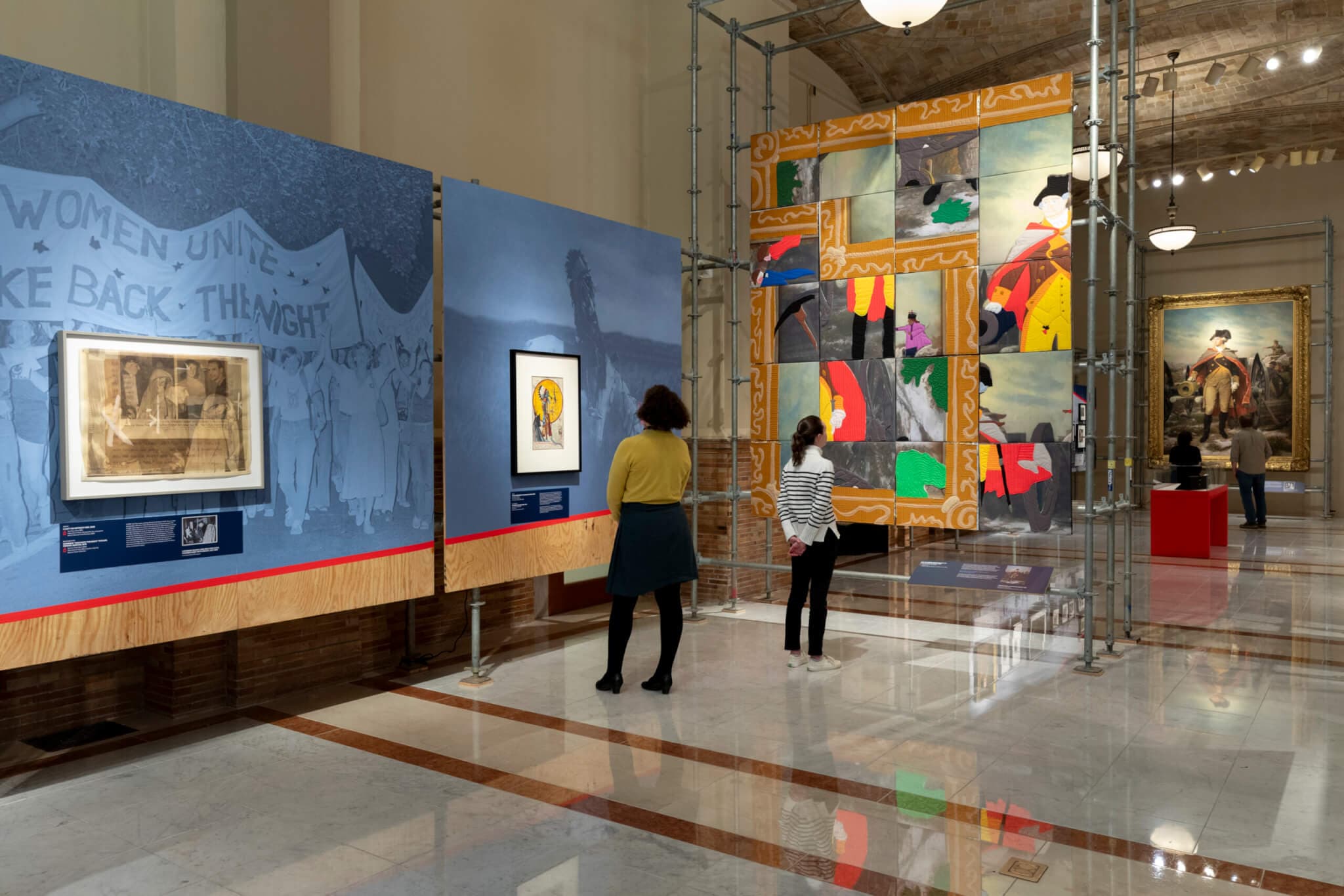
Installation view, “Revolution! 250 Years of Art & Activism,” Boston Public Library, 2026. Photo by Mel Taing. Courtesy of Boston Public Library.
“Revolution! 250 Years of Art & Activism,” October 23, 2025–April 21, 2026
Boston Public Library
700 Boylston Street, Boston, MA
The first major exhibition by the Boston Public Library in a decade, “Revolution! 250 Years of Art & Activism in Boston” unites historic pieces, contemporary artworks by Boston-area and regional artists, and archival materials from the BPL’s Special Collections to celebrate the 250-year anniversary of the signing of the Declaration of Independence. The selection of pieces, including photographs and engravings from local abolitionist, feminist, and civil rights movements, emphasize that though Boston is historicized for its role in the nation’s birth as “the cradle of the American Revolution,” this revolutionary spirit has continued throughout the nation’s history. —Kim Córdova
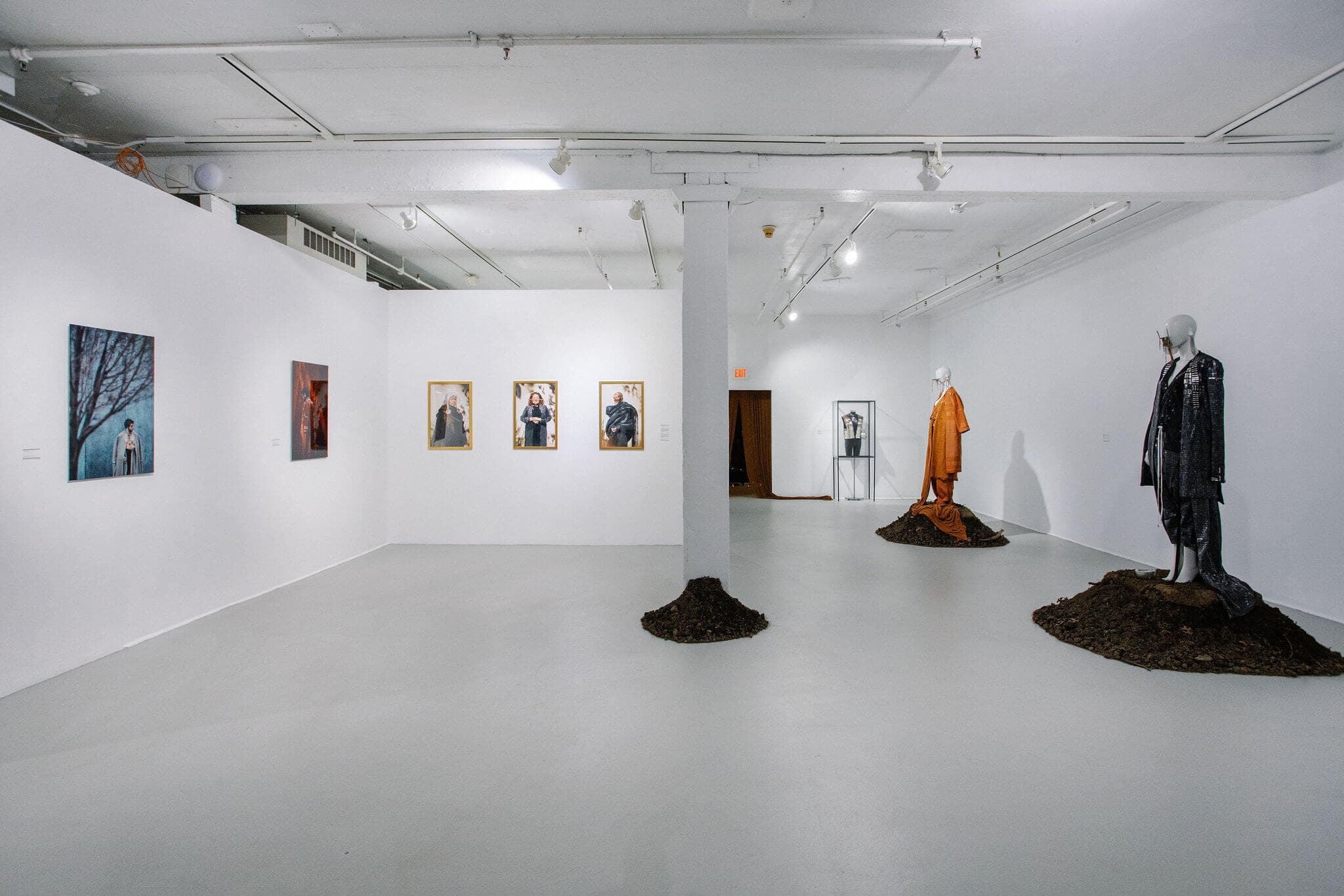
Installation view, “A Él Mismo: Christian Hernán De Restrepo,” Boston Center for the Arts, 2026. Courtesy of Boston Center for the Arts.
“A Él Mismo: Christian Hernán De Restrepo,” December 5, 2025–March 7, 2026
Boston Center for the Arts
Mills Gallery, 551 Tremont Street, Boston, MA
What if Spanish colonizers had never reached the shores of the Americas? Boston-based Colombian American artist and designer Christian Hernán De Restrepo Zúñiga Velázquez Betancourt imagines answers to that animating question in “A Él Mismo.” Bridging fashion and sculpture, De Restrepo’s textile works and jewelry draw on deep research, coaxing motifs from millennia-old archaeological sites and Inguapi Period statuary. Stapled fabric, fringe, dramatic draping, and other embellishments in gold, copper, and silver shades nod to tumbaga, an alloy used in pre-Hispanic metalwork to craft ritual objects, while the wonderfully jarring jewelry might have you seeing the familiar features of the human face in new ways. Modeled in some cases by his own family members, these pieces honor the artistry of his ancestors but feel of the moment—even of the future. —Jacqueline Houton
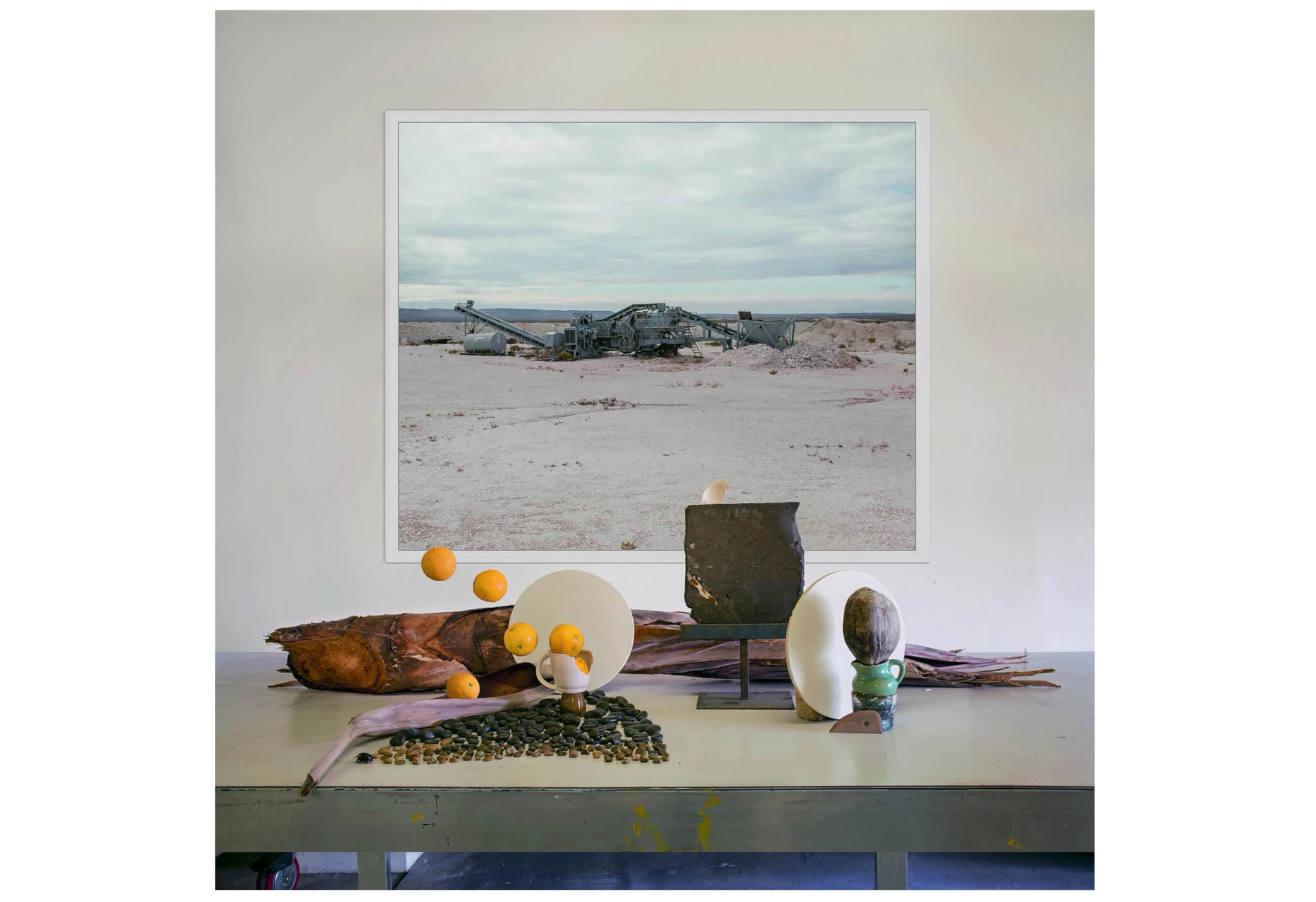
Mary Mattingly, Holding Not Having (after Robin Messing), 2018. Chromogenic dye coupler print, 30 x 30 inches. Courtesy of The Current.
“Water Writes the Garden,” January 15–April 10
The Current
90 Pond Street, Stowe, VT
The Current, a contemporary art center housed within the Helen Day Memorial Library and Art Center, is changing what a ski town like Stowe is known for by bringing global contemporary art dialogues into a local context. Brooklyn-based artist Mary Mattingly has spent decades creating work that calls attention to the individual roles we play in consuming resources and producing waste, as well as to the systems that prohibit or limit equitable access to basic human needs—shelter, clean water, healthy food, community, and more. At the Current, “Water Writes the Garden” showcases the connectedness of macro and micro phenomena—like water cutting through the earth to form new geographies or coursing through our bloodstream and sweat glands. Mattingly has always dealt with a variety of scales, like creating a floating garden barge in New York City to get around foraging laws or, at the Current, turning a lens (quite literally) to the materials utilized in producing photographs, right down to the cobalt in lithium batteries. With sculpture, photography, and installations, “Water Writes the Garden” is a tight but impactful show with some tough truths. —Jameson Johnson
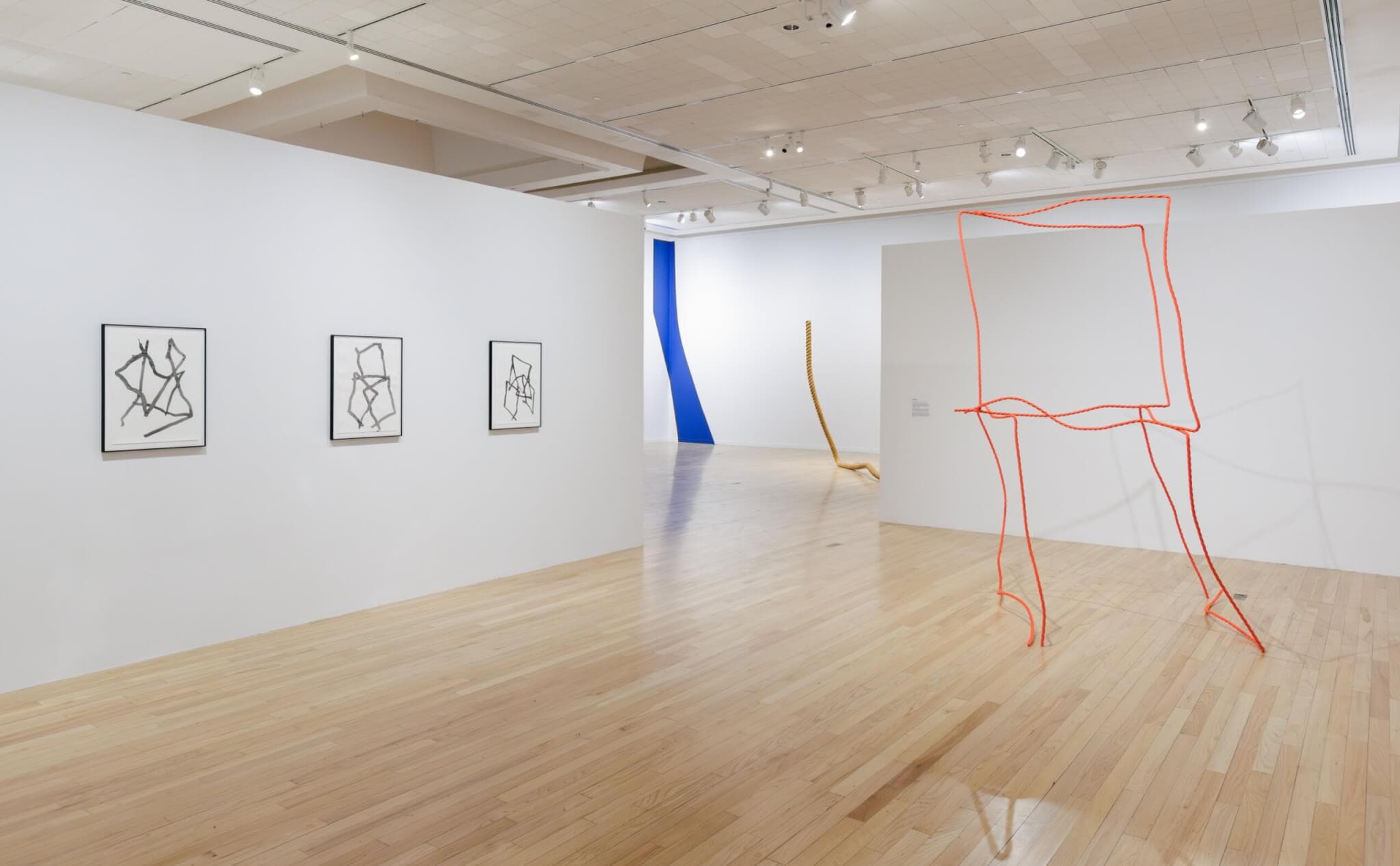
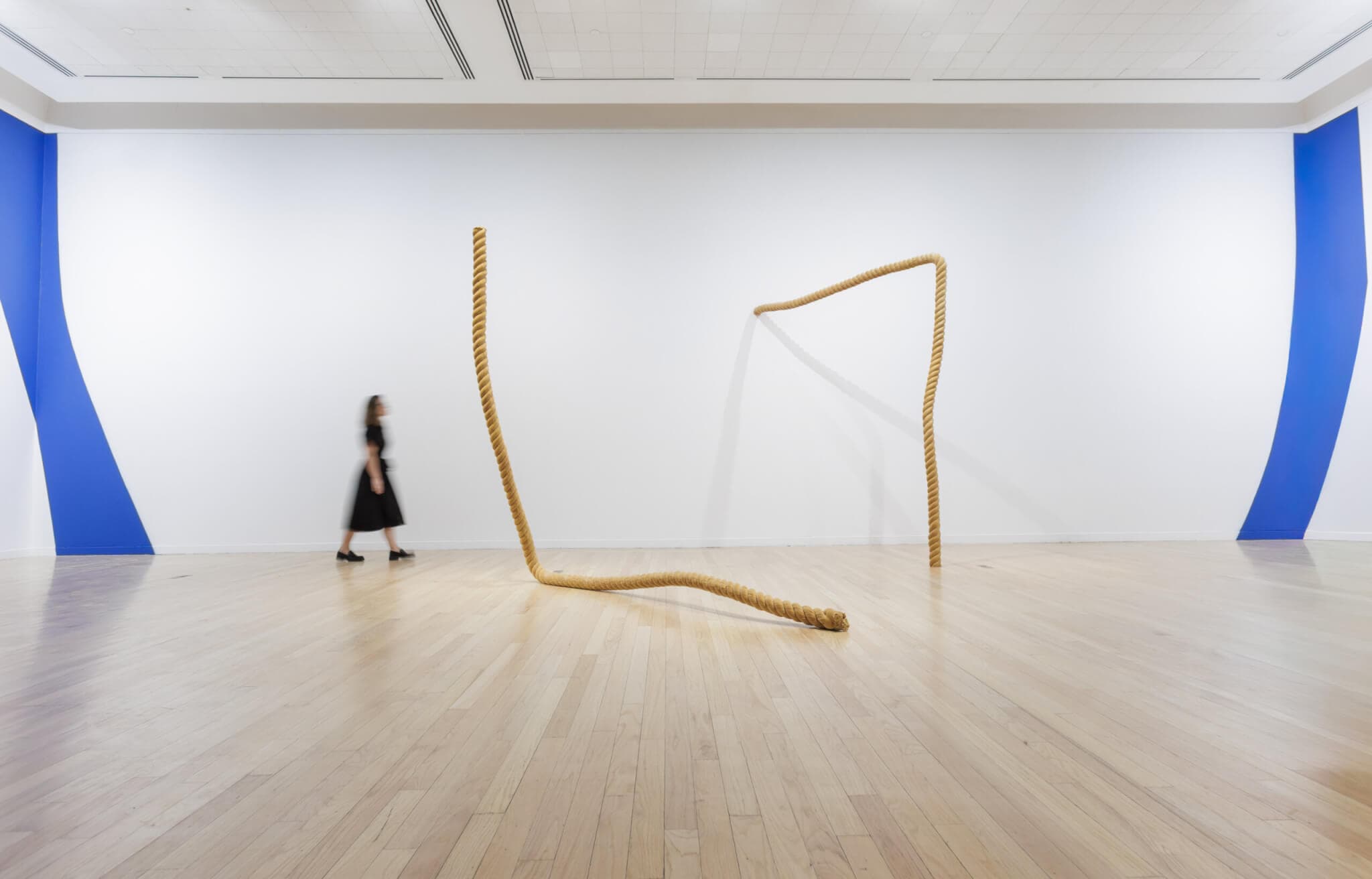
Installation view, “Michelle Lopez: Shadow of a Doubt,” at Tufts University Art Galleries, Medford. January 15–April 19, 2026. Photo by Tim Correira.
“Michelle Lopez: Shadow of a Doubt,” January 15–April 19
Tufts University Art Galleries
40 Talbot Avenue, Medford, MA
It’s hard to underscore the scale of Michelle Lopez’s minimalist yet impactful structural work, but “Shadow of a Doubt” at TUAG makes its force unmistakable. Spanning roughly two decades, the exhibition moves between sculpture and drawing (including a new drawing work from Lopez) in a way that feels less archival than it does conversational. Lopez works with industrial materials (aluminum, rope, glass) and pushes them into states of tension and exposure. The forms lean, hang, and stretch into space, carrying a quiet sense of precarity. Referencing minimalist lineages without reverence, the work turns those histories outward, toward questions of power, visibility, and who is left unseen when institutions claim solidity. —Emmy Liu
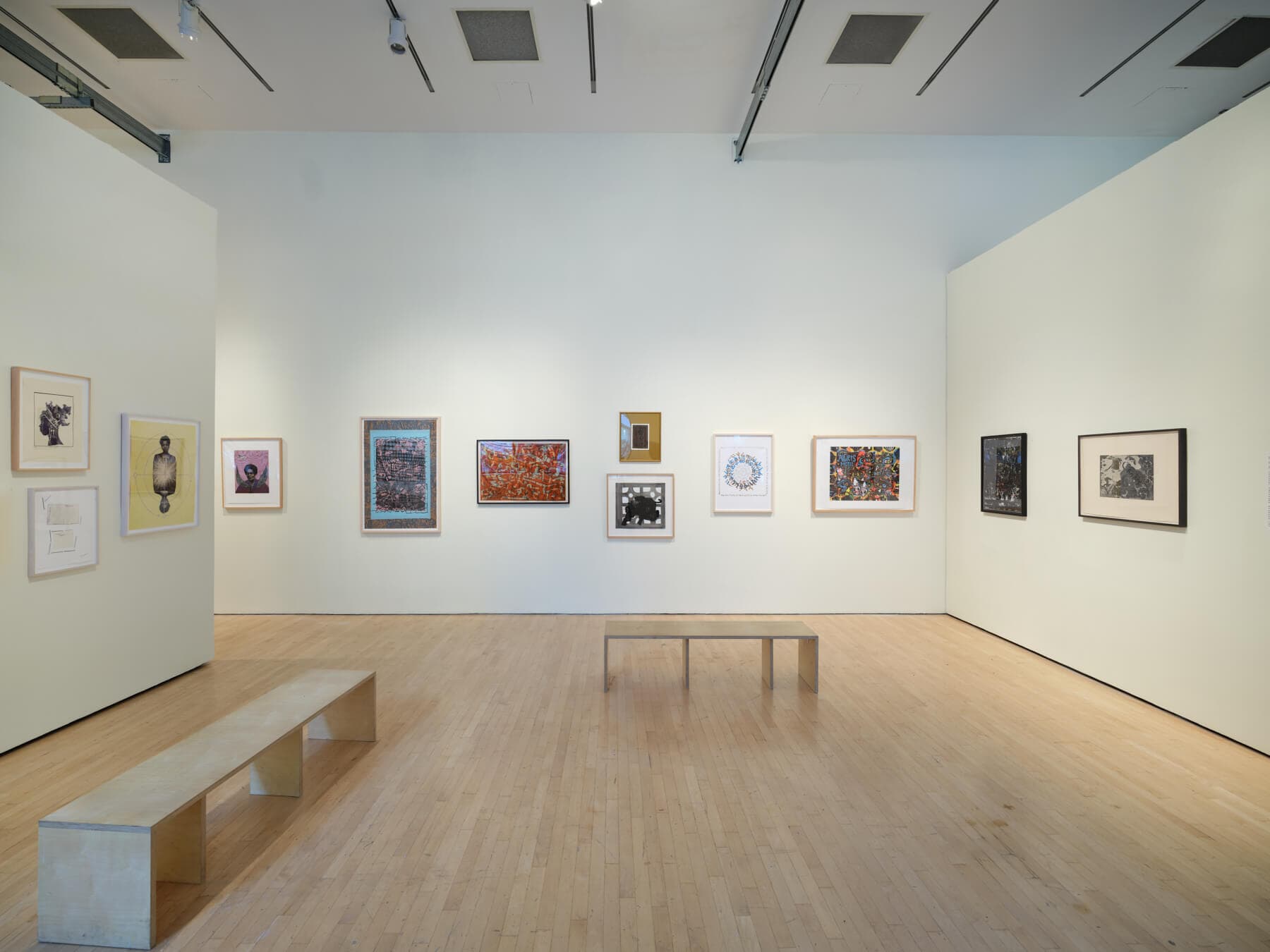
Installation view, “Press & Pull: Two Decades at Robert Blackburn Printmaking Workshop,” The James Gallery CUNY Graduate Center. Photo by Argenis Apolinario.
“Press & Pull: Two Decades at the Robert Blackburn Printmaking Workshop,” January 22–May 31
MassArt Art Museum
621 Huntington Avenue, Boston, MA
This group exhibition unites more than thirty-five works by thirty-three artists to review the history and legacy of the oldest and longest-running community print shop in the US, Robert Blackburn Printmaking Workshop (EFA RBPMW), now housed at the Elizabeth Foundation for the Arts in New York. Founded in 1947 by the master lithographer as The Printmaking Workshop, the project was a model of inclusive and experimental collaboration. In the context of ongoing segregation in the US, Blackburn’s workshop sought to make professional quality printmaking available to any artists interested in the craft. Over the years, the shop became a hub of international collaboration, ultimately earning Blackburn a MacArthur Genius Grant in 1992. Today EFA RBPMW has over 1,300 artists and 10,000 prints in its archives, and I’m excited to see this selection of standouts. —Kim Córdova
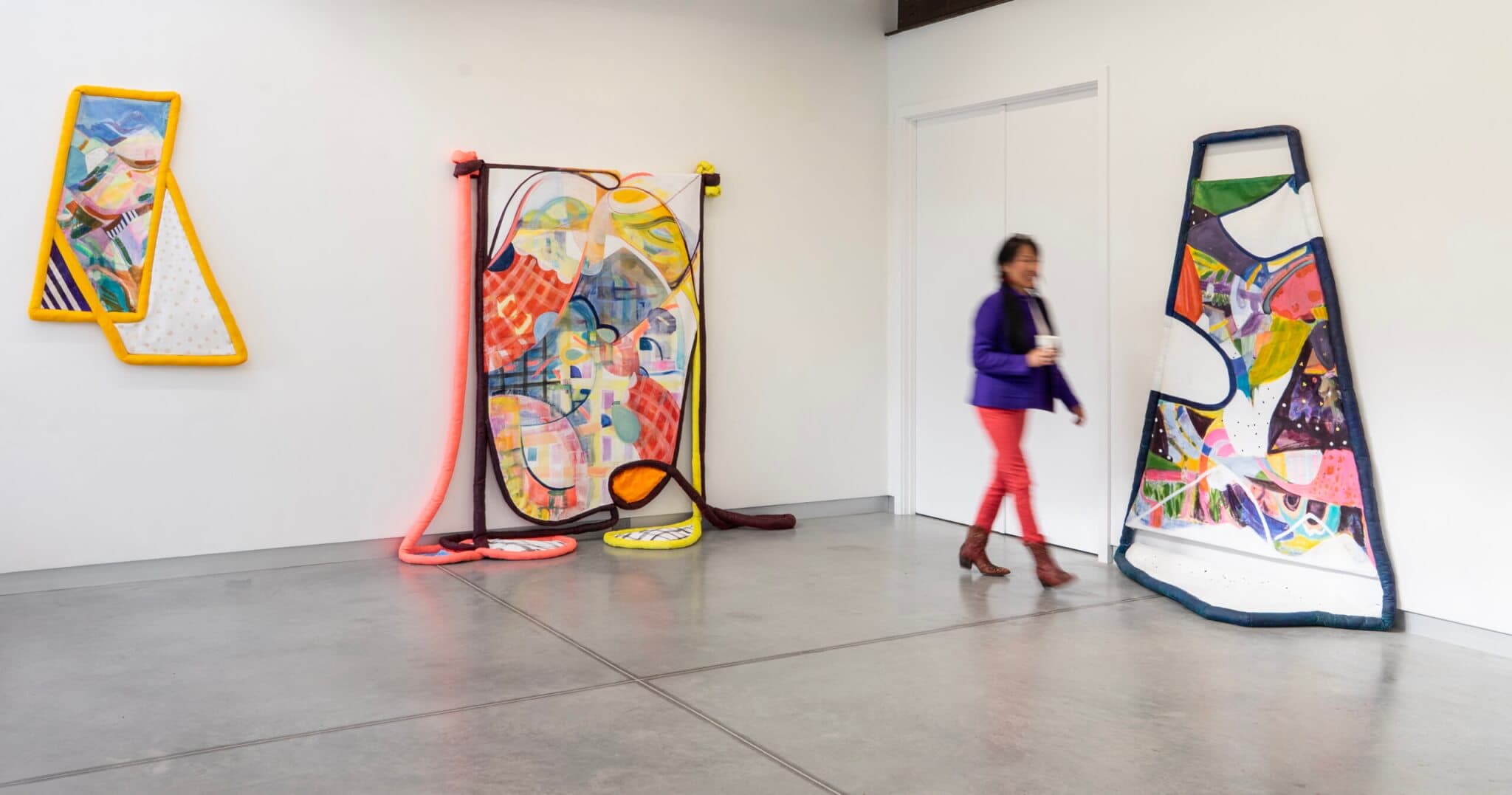
Installation view, Jai Hart, “The Wall Wanted to Play Too: The Architecture of Tenderness,” Overlap Newport, 2026. Photo by Elizabeth Ellenwood Photography. Courtesy of Overlap Newport.
“The Wall Wanted to Play Too: The Architecture of Tenderness,” January 24–May 25
Overlap Newport
112 Van Zandt Avenue, Newport, RI
Bold colors, nontraditional shapes, and approaches to negative space challenge the conventions of form and the boundaries of the work in Jai Hart’s “The Walls Wanted to Play Too: The Architecture of Tenderness.” This showcase of new works expands upon the artist’s practice of abstractly recording the geographies of her personal memory and remains true to Hart’s signature method of combining painting, sculpture, and installation. Love Me, Loves Me Not, Loves Me (2025), for instance, incorporates painted tubes stuffed with poly-fil to bring a three-dimensional element to the canvas. At times the tubes carve into the colorful central canvas, outline it, and even anchor it by engaging the floor space in front of the exhibition wall. While at Overlap, visitors have the opportunity to see “Slip,” a concurrent show of works by artists Olivia Baldwin and Barbara Owen, who share Hart’s commitment to forward-thinking multimedia arrangements. —Alisa Prince

Charles J., Butterfly Vase, 2023. Mahogany, 20 x 26 inches. Courtesy of the artist.
“Shaping Futures: The Prison Outreach Program of New Hampshire Furniture Masters,” January 24—June 7
Fuller Craft Museum
455 Oak Street, Brockton, MA
Since 1999, the artisans of NH Furniture Masters have taken on apprentices at the New Hampshire State Prison for Men, using the craft of woodworking to foster not only professional skills but creativity, community, and self-esteem. The project has since expanded to offer programs at the Maine State Prison and the New Hampshire Correctional Facility for Women, and now the Fuller Craft Museum is showcasing extraordinary work from participants at all three locations alongside that of their mentors—objects of beauty and utility, made with great care, that prove the truth of artist Corita Kent’s maxim “The person who makes things is a sign of hope.” —Jacqueline Houton
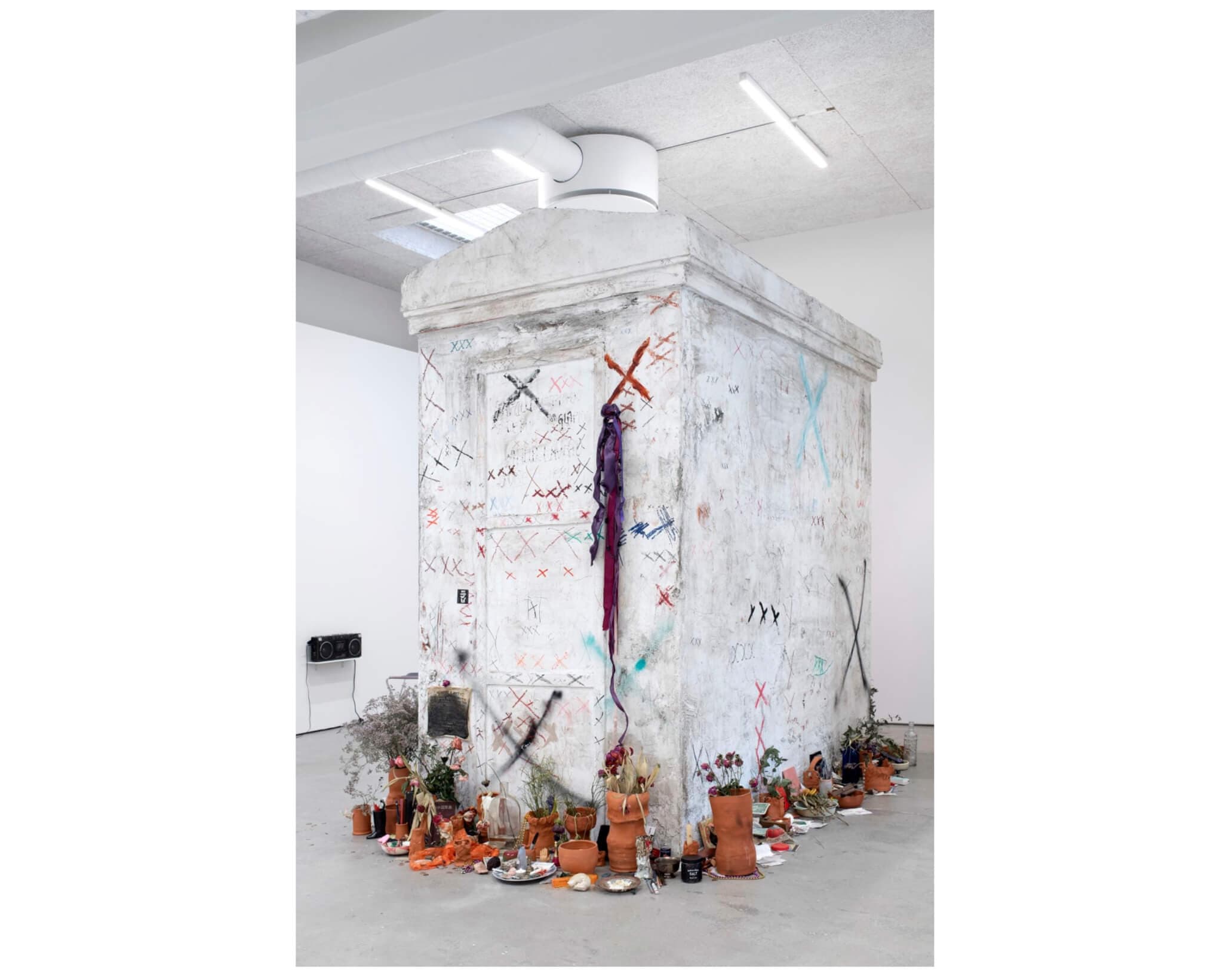
Jennie Jieun Lee, Marie, 2022. Courtesy of the artist, Nichelle Beauchene Gallery, New York, and Cooper Cole Gallery, Toronto. Photo by OMN.
“Jennie Jieun Lee: Luteal Elements and Grooves,” January 25–May 25
The Aldrich Contemporary Art Museum
258 Main Street, Ridgefield, CT
For our spring 2025 issue, ceramicist Jennie Jieun Lee shared that every new show “begin[s] with a small piece of clay manipulated by my hand.” For her first solo exhibition at Connecticut’s Aldrich Contemporary Art Museum, “Luteal Elements and Grooves,” that hand is present in a series of recent and new sculptures that celebrates the expansive and accretive qualities of the human condition—and the artist’s own practice. Lee’s work embraces a plurality of references—Western and Eastern, old and new—from the full range of the arts (music, film, literature), amassed in part during her time as first a student and now a professor at the School of Fine Arts at Tufts University. Viewers are treated to the panoply of these layered expressions—rendered intimate in ceramics assembled on abandoned kilns, magnified on a monumental textile work—and are even encouraged to leave their own imprints in the form of marks and offerings on Marie (2022), a life-sized sculptural recreation of Marie “the Voodoo Queen of New Orleans” Laveau’s nineteenth-century tomb. —Jessica Shearer
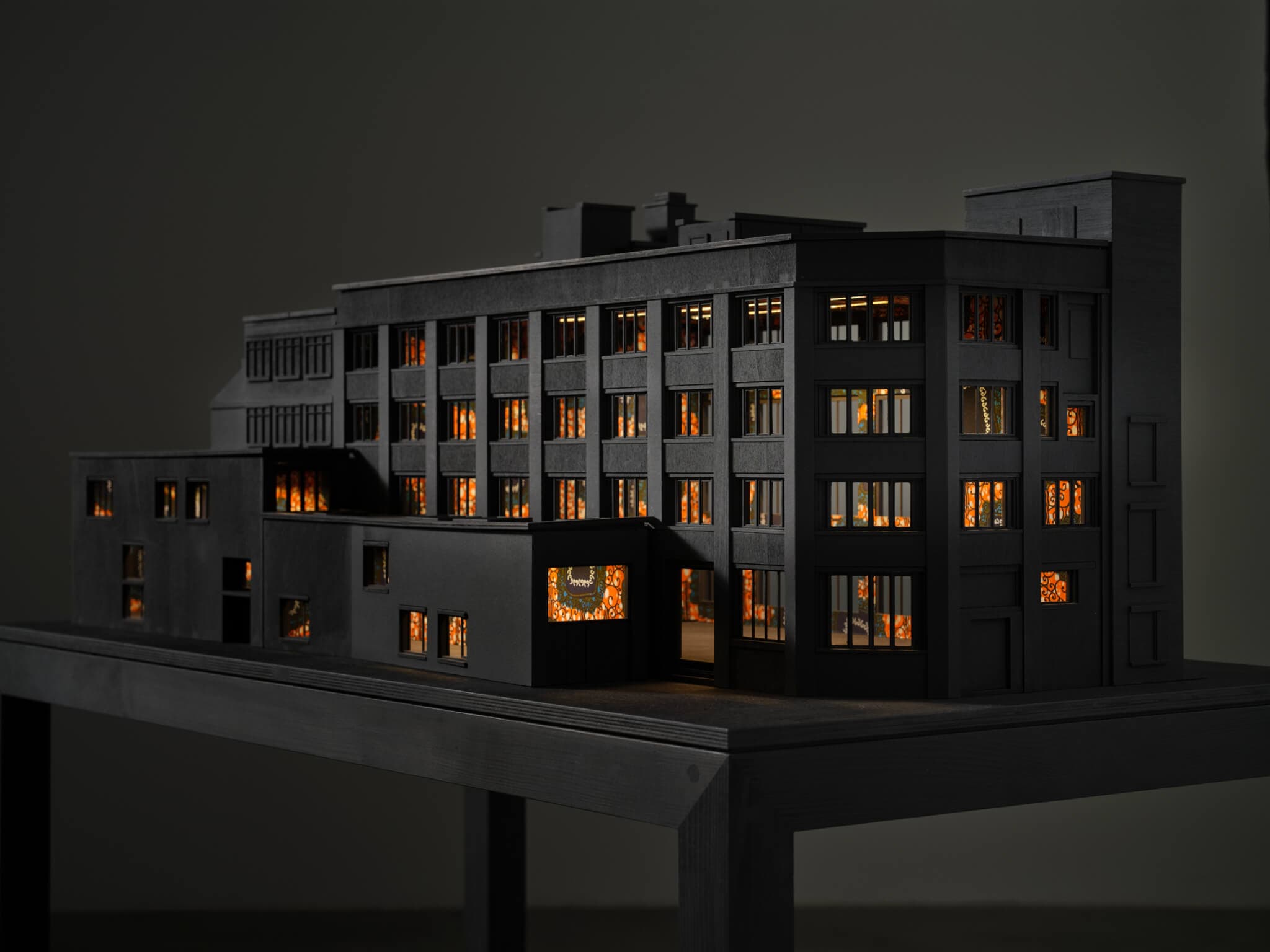
Yinka Shonibare CBE, Sanctuary City (Amnesty International), 2024. Wood, paint, Dutch wax printed cotton textile, LED lights. Courtesy of Tia Collection. Courtesy of the artist and Goodman Gallery, Cape Town, Johannesburg, London, and New York, James Cohan Gallery, New York, and Stephen Friedman Gallery, London and New York. Photo by Jo Underhill. © Yinka Shonibare CBE. All rights reserved, DACS 2025.
“Yinka Shonibare: Sanctuary,” February 11–January 3, 2027
Brandeis University’s Rose Art Museum
415 South Street, Waltham, MA
“Yinka Shonibare: Sanctuary” marks the US debut of Sanctuary City (2024), a powerful installation that feels especially urgent in the current moment. Composed of eighteen scaled-down buildings that have historically functioned as sites of refuge, the work moves across eras and geographies—temples, churches, schools, shelters—asking what it has meant, and especially what it means now, to offer protection. Installed in near darkness, each structure glows from within, drawing attention to architecture’s quiet authority to include or exclude. In a time defined by global displacement and ongoing humanitarian crises, Shonibare frames sanctuary as fragile, political, and deeply human. —Emmy Liu
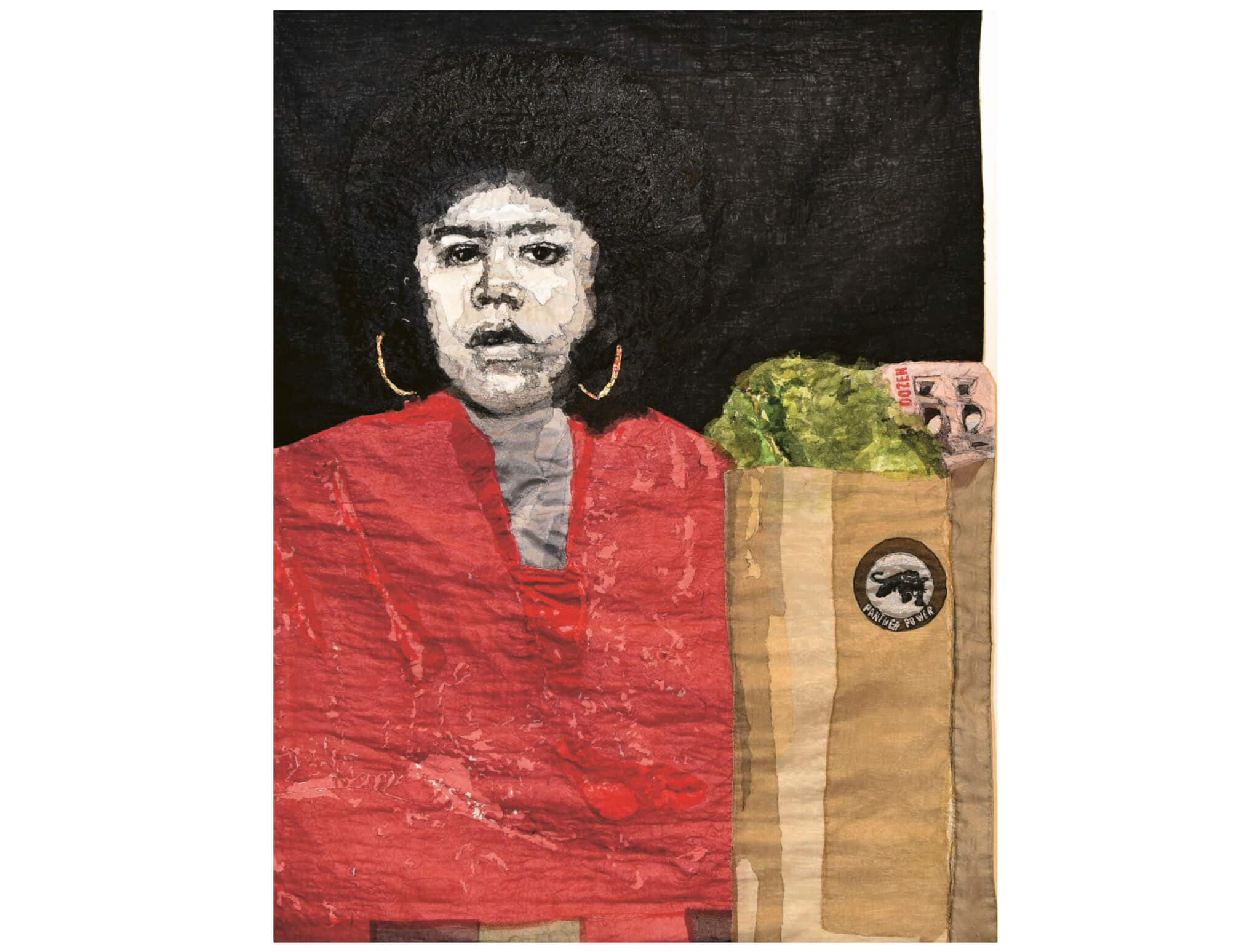
L’Merchie Frazier, Ericka Huggins: Liberation Groceries, 2019. Thinsulate fabrics, nylon, and synthetic tape. 50 × 40 inches (127 × 101.6 cm). Courtesy the artist. Photo by Craig Bailey / Perspective Photo. © L’Merchie Frazie.
“Say It Loud: AAMARP, 1977 to Now,” February 12–August 2
Institute of Contemporary Art / Boston
25 Harbor Shore Drive, Boston, MA
The African American Master Artists-in-Residence Program at Northeastern University is one of the key pillars of Black community and artistic engagement in Boston. Organized chronologically, this exhibition moves us from Dana C. Chandler’s 1977 founding of the program into the present—a timely local art history lesson for Bostonians and visitors alike. AAMARP rightly and beautifully expresses the diversity of the Black Diaspora by including a broad range of artistic voices and styles. Recently celebrated artist Allan Rohan Crite, as well as L’Merchie Frazier, Richard Yarde, Susan Thompson, Paul Goodnight, and others, have been a part of the program. Their works use painting, photography, woodworking, textile, and collage to address various themes including racial justice, home life, Pan-Africanism, and intergenerational bonds. —Alisa Prince
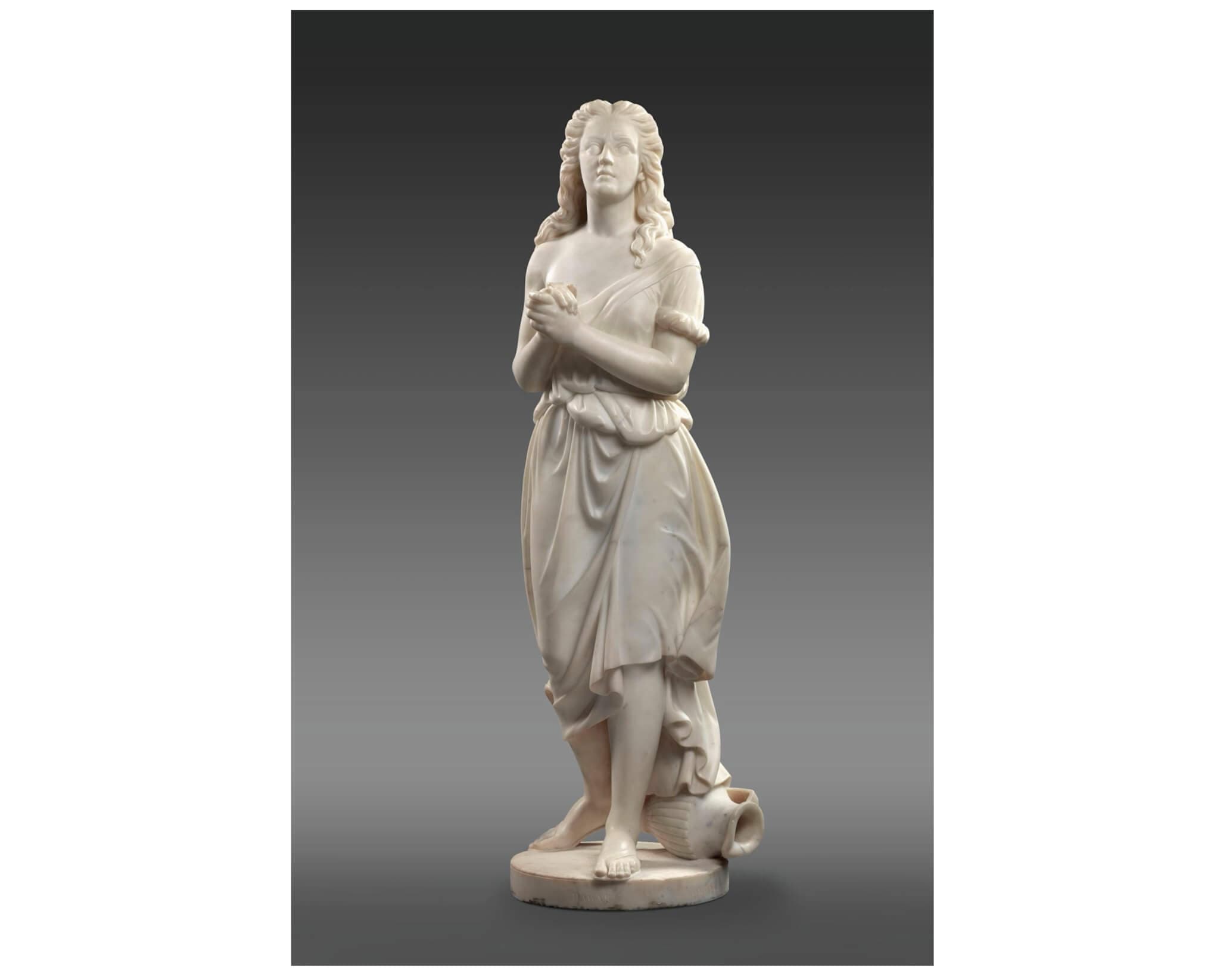
Edmonia Lewis, Hagar, 1875, carved marble. Gift of Delta Sigma Theta Sorority, Inc., 1983.95.178. Smithsonian American Art Museum.
“Edmonia Lewis: Said in Stone,” February 14–June 7
Peabody Essex Museum
161 Essex Street, Salem, MA
When Edmonia Lewis moved to Boston in 1863, it was at the suggestion of Frederick Douglass, who urged the young sculptor to “seek the East.” Known as “Wildfire,” Lewis was a Black and Indigenous artist whose mastery of carved stone made her an internationally acclaimed sculptor by the time of her death in 1907. Her legacy as an abolitionist and pioneering artist comes into focus with this first major museum retrospective highlighting recently recovered letters, photographs, and sculptures. On paper, Lewis’s upbringing is motion-picture worthy: She was orphaned by the age of nine, raised by her Native maternal aunts, and later supported by her brother, who struck it rich in the California gold rush, providing the means for Lewis to attend Oberlin College during the Civil War. There, she was subjected to racist attacks and accusations that kept her from graduating. When she moved to Boston, she honed her craft under Edward Augustus Brackett, maintained a studio on Tremont Street, and became active in abolitionist circles around Beacon Hill. Lewis moved to Rome in 1866 and established herself within social circles that allowed for her work to thrive more than it had in the US. For decades, Lewis’s work as a sculptor has been acclaimed, but not with the intersectional focus of this major solo exhibition. —Jameson Johnson
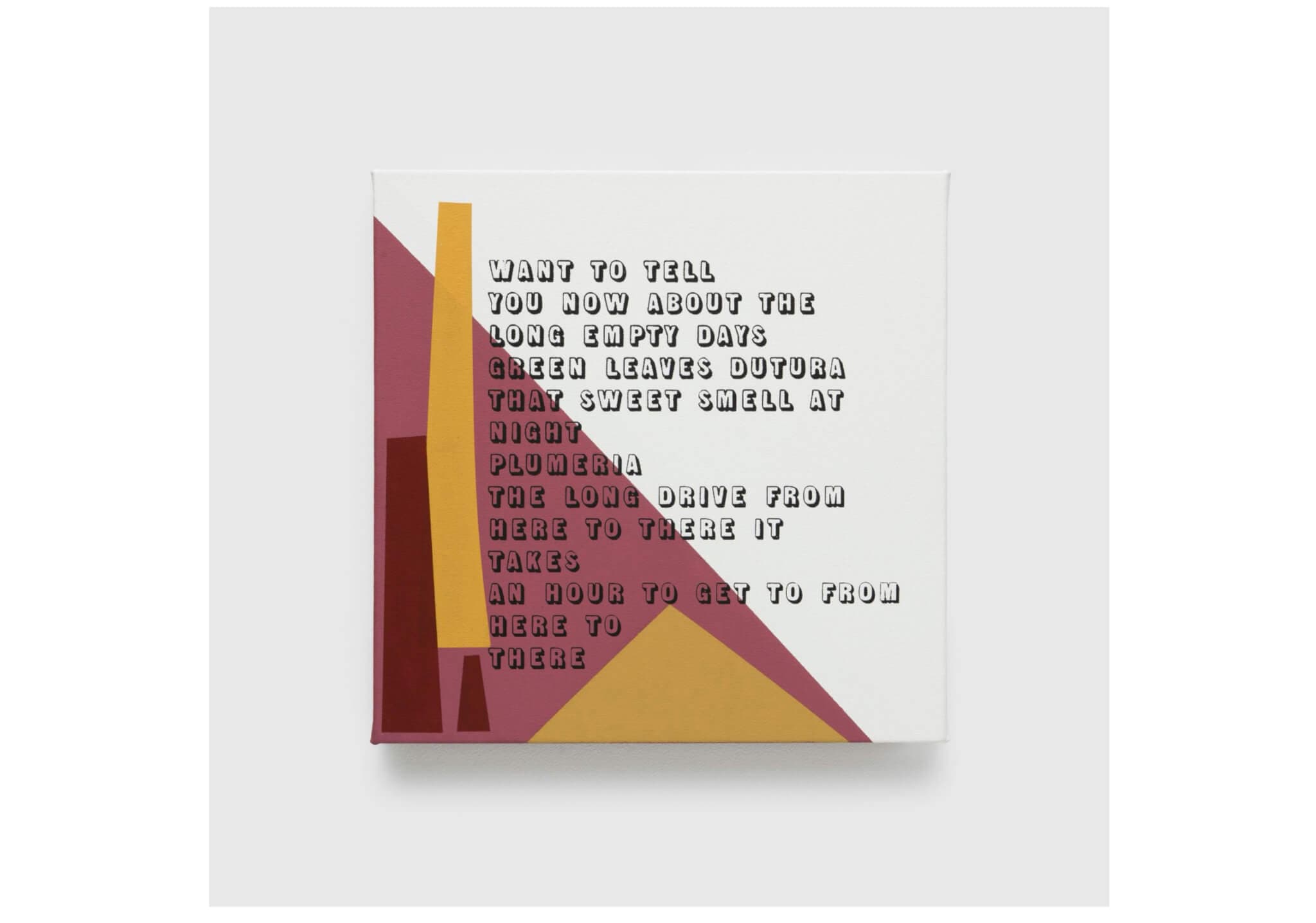
Eve Fowler, I want to tell you, 2025. Flashe and acrylic ink on canvas, 18 x 18 x 1 ½ inches. Photo by Greg Carideo. Courtesy the artist and Gordon Robichaux.
“Eve Fowler: words doing as they want to do,” February 17–June 5
Harvard Radcliffe Institute
10 Garden Street, Cambridge, MA
This February, photographer, artist, and former Radcliffe fellow Eve Fowler returns to Harvard’s campus with “words doing as they want to do,” presented alongside a concurrent show at Gordon Robichaux Gallery in New York. The exhibition, a culmination of Fowler’s decades-long engagement with language, poetry, and visual art, draws on personal and literary archives. It features an artist book and her familiar block letters in vibrant fuchsia, royal blue, and marigold flashe and acrylic. Across the show, Fowler references the work of queer literary figures such as June Jordan, Gertrude Stein, and Alice B. Toklas, transforming their words into bold visual forms. Taken together, the pieces reveal both the limits and possibilities of language. —Ava Mancing
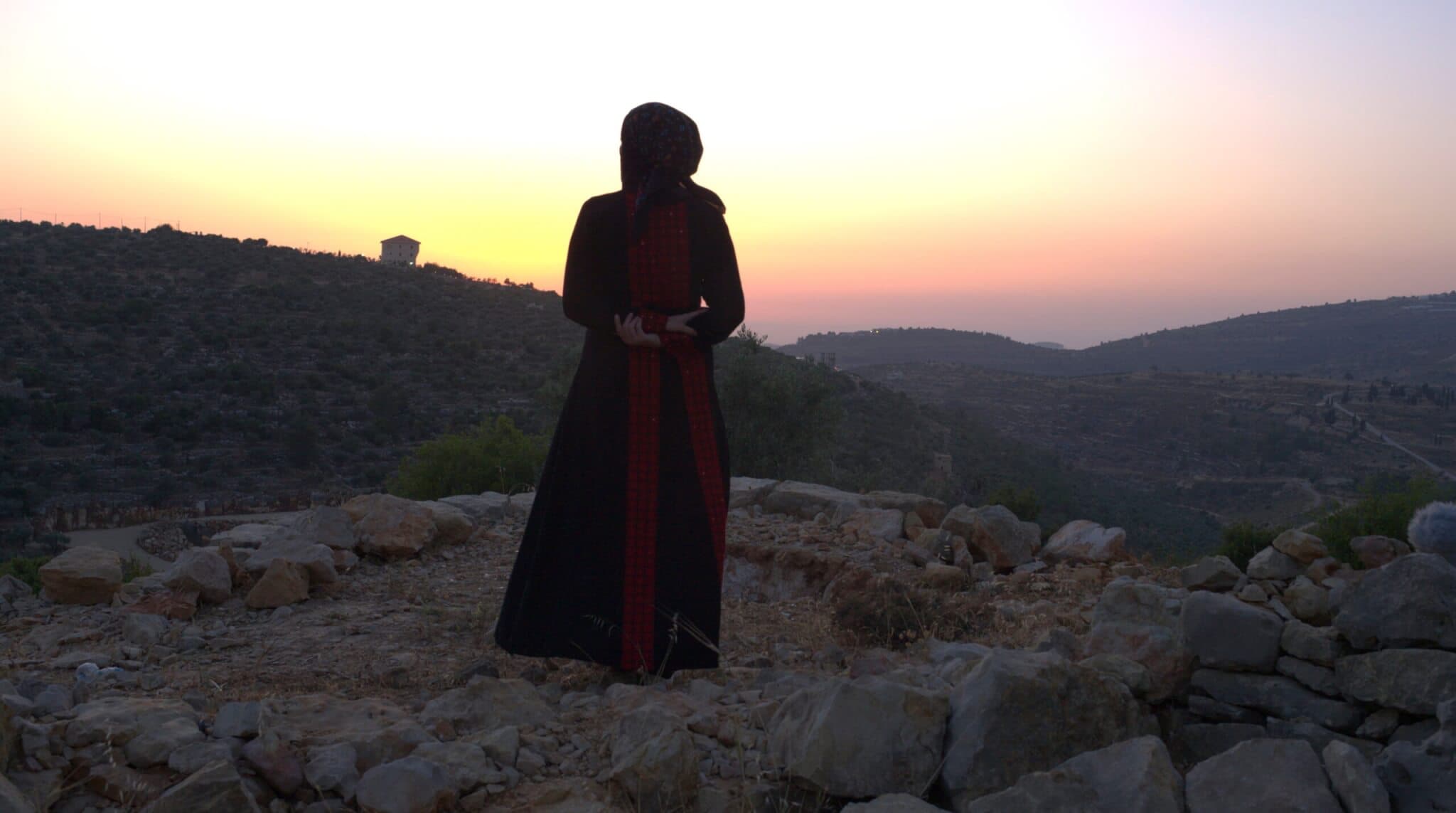
Basel Abbas and Ruanne Abou-Rahme, Still from Prisoners of Love (working title), 2025. Courtesy of the artists.
“Prisoners of Love: Until the Sun of Freedom,” February 19–May 31
The Bell at Brown University
64 College Street, Providence, RI
“Prisoners of Love: Until the Sun of Freedom,” a newly commissioned installation by artists Basel Abbas and Ruanne Abou-Rahme, will be the last exhibition mounted by curators Kate Kraczon and Thea Quiray Tagle at the Bell Gallery. The show foregrounds the stories of former political prisoners, told through interviews shot on location in Palestine and projected among a multimedia installation comprising steel, fabric, and concrete. Introduced by “Enemy of the Sun,” a poem by Palestinian poet Samih al-Qasim that was long misattributed to George Jackson of the Black Panthers, the film explores tenacity, courage, and beauty whetted by resistance and—dare we dream it—hope. —Jessica Shearer
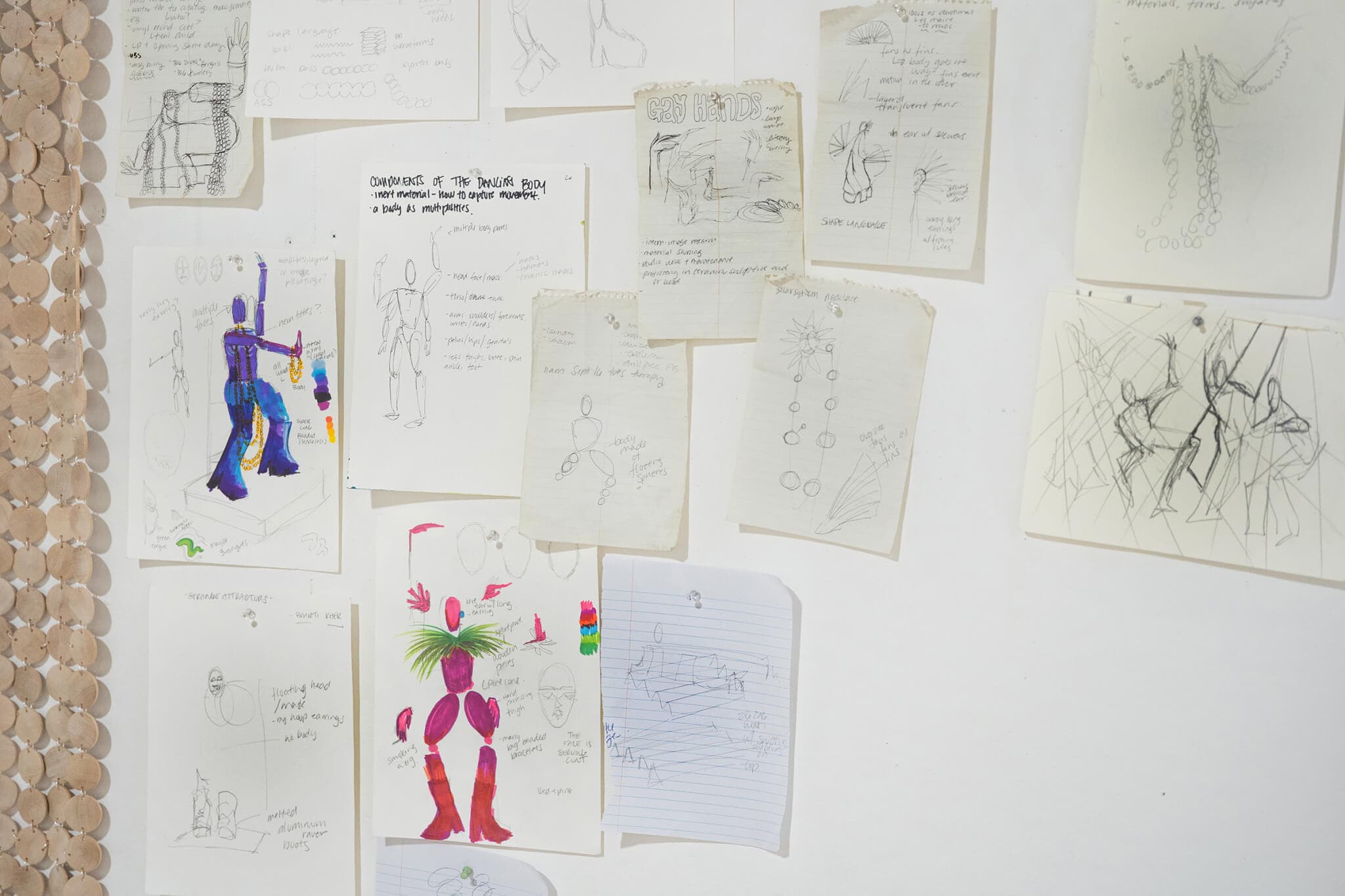
Benjamin Spalding, sketches for sculptural forms for “Go Bang!,” his forthcoming “Momentum 2026” exhibition. Photo by Alaric Beal.
“Benjamin Spalding: Go Bang!,” March 21–September 20
Farnsworth Art Museum
16 Museum Street, Rockland, ME
Now in its third year, Farnworth’s “Momentum” exhibition series will present “Benjamin Spalding: Go Bang!,” a vibrant installation of larger-than-life figural forms by the Portland-based sculptor, DJ, and athlete. Inspired by Arthur Russell’s “Go Bang! #5”—and its line “I wanna see all my friends at once, I’d do anything to get the chance to go bang”—Spalding channels the joy and collective energy of disco into playful wooden figures. Preliminary sketches depict forms carved from separate pieces and carefully assembled; they’re unmistakably human but surprising in their gestures and proportions, capturing movement and an energetic spirit. For Spalding, this imagined dance floor will be a place where all his practices converge, creating a celebration of community and release I can’t wait to step into. —Ava Mancing
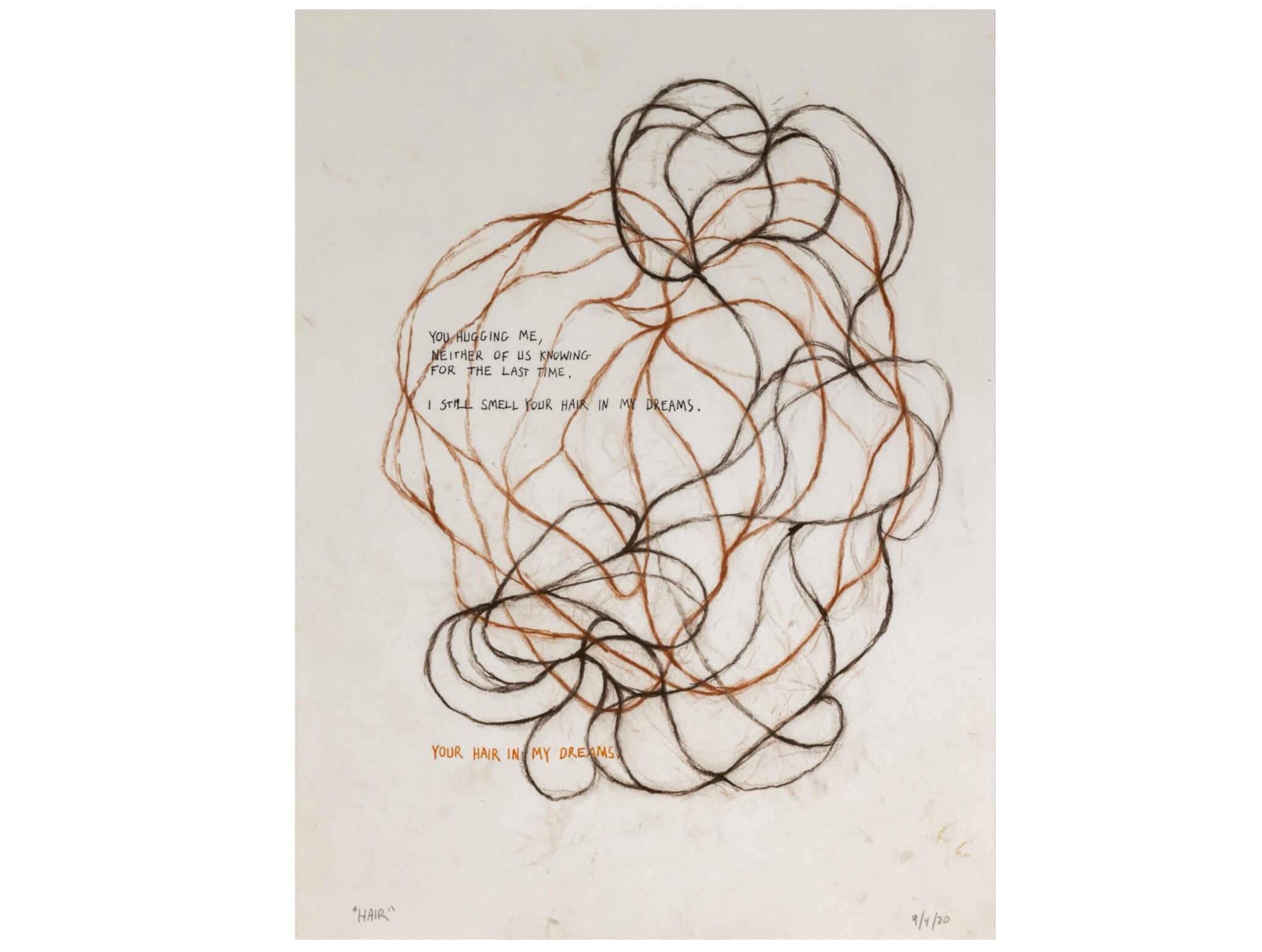
Peter Bruun, Hair, 2020. Charcoal & pastel with ink writing, 11 x 15 inches. Courtesy of the artist and the University of Southern Maine Art Gallery.
“Even as We Grieve,” April 21–July 31
Crewe Center for the Arts at University of Southern Maine
111 Bedford Street, Portland, ME
The loss of a loved one can shape the days ahead. For sage artist Peter Bruun—whose early work explored self-portraiture—the death of his daughter due to an overdose has shaped his forthcoming exhibition, “Even As We Grieve.” Big Crying I (2020), with its blue curved markings, seems to mimic the chaos of unrelenting tears; Hair (2020) speaks to the artist being haunted by his daughter’s hair in his dreams. With these, the collection delves into how connection and community help people endure and transpose pain, loss, and crisis. Prior to losing his daughter, Bruun founded a nonprofit, Art on Purpose, that uses art to bring people together around meaningful issues. Now, as the University of Southern Maine’s artist-in-residence, Bruun’s “Even as We Grieve” will highlight his artwork, as well as amplify community members’ voices and stories navigating loss, addiction, systemic inequity, and the search for connection. —Jacquinn Sinclair